


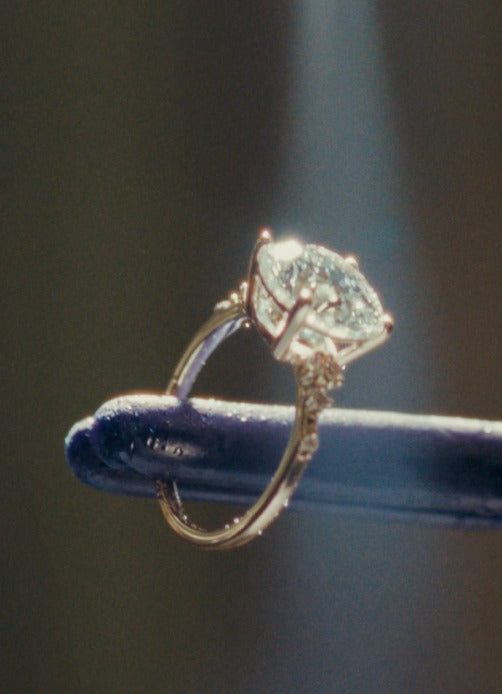
Engagement Ring Buying Guide
Choosing an engagement ring can feel like a lot. It doesn’t have to.
Start with the style you love. From there, we’ll help you explore the diamond, metal and details that fit your taste, your hand and your budget.
At Spence, you can compare options confidently, explore different combinations and see pricing as you go. No pressure. Just guidance to help you choose well.
 Step 1
Pick Your Ring
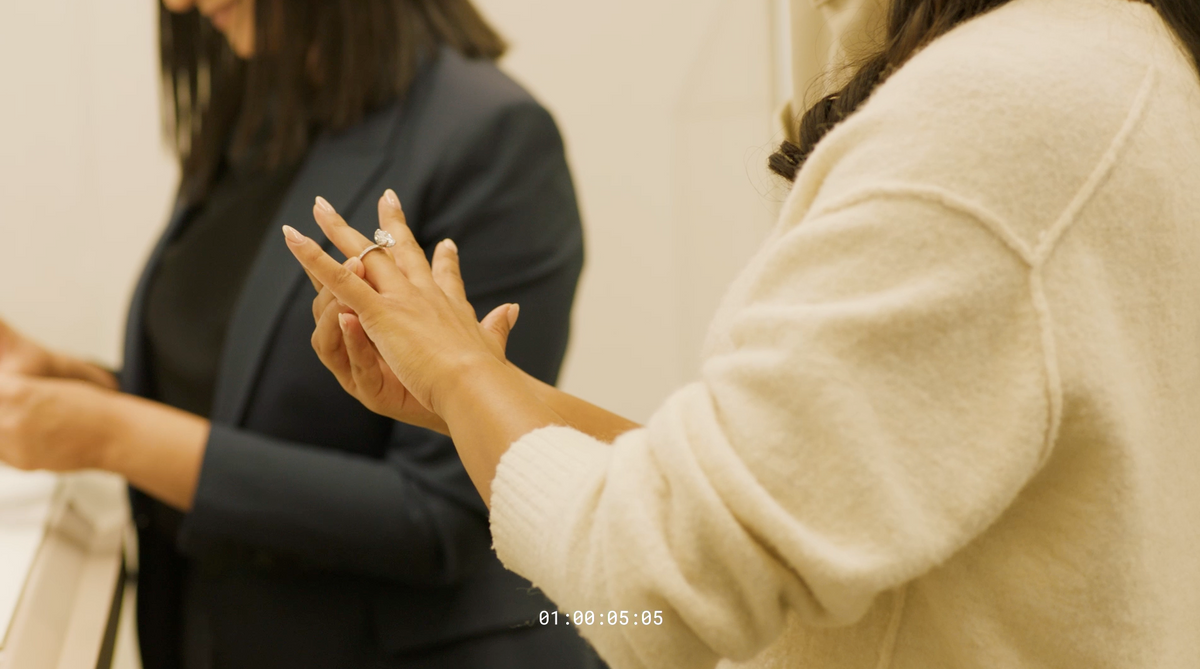
Try on 2,500+ settings in our open showcases. No glass cases, no waiting for someone to find a key, just pick up the ones you like.
Choose Your Diamond
Sit down with an expert who'll show you exactly what you're paying for and why. No upsell, no jargon; just the perfect unique diamond at the right price.
Expertly Crafted to Order
Once you've decided, our Vancouver artisans craft your ring to order. Nothing pulled off a shelf. Just your ring, made for you.
Metal Guide
The metal you choose can change the look, feel and character of your ring. Each has its own colour, durability and personality, so it’s worth seeing your options side by side.

A bright, modern choice that complements almost any diamond or setting. White gold gets its crisp white appearance from rhodium plating, which may need to be refreshed over time to maintain its finish.

Platinum
Platinum is naturally white, rare and exceptionally strong. Its colour won’t fade or change over time, and it has a naturally premium feel. It’s also hypoallergenic.
For a ring designed to last a lifetime, platinum is an excellent choice.

Yellow Gold
Yellow gold is a traditional choice for engagement rings. A blend of pure gold, copper and silver gives it its signature warmth and creates a striking contrast with a brilliant diamond.
It’s typically available in 14k and 18k, giving you options depending on the look and feel you prefer.

Also known as pink gold or red gold, rose gold adds a warm, romantic feel to an engagement ring. It’s a great choice if you’re looking for something a little more distinctive.
Rose gold is also often used in bi-colour designs to contrast with white or yellow gold, and is typically available in 14k and 18k.
PLEASE NOTE: The purity of gold is measured in karats which is measured out of a total of 24 parts; pure gold is 24 karats. However, 24k gold is extremely soft and unsuitable for jewelry as it will bend and dent very easily. The solution for this is to mix gold with other metals in a process called alloying.

Anatomy of a Ring
Center Stone
The center stone is the main diamond and focal point of the ring.
Prong
Prongs are small pieces of metal that secure the diamond in place. Most traditional settings use four or six prongs, depending on the shape and style of the diamond.
Head / Setting
The head or setting is the elevated part of the ring that extends from the shank. It is specifically designed to secure the center stone.
Shoulder
The shoulder is the part of the ring that connects the shank to the setting that holds the center stone.
Shank
The shank is the part of the ring that wraps around your finger — essentially, the band itself. It can be made of solid metal or feature diamond accents and other detailing.
Make It Yours
Small details can make a big difference. These are just a few of the ways you can personalize your ring. Explore different combinations of stones, accents and setting details to find the look that feels right for you.

Halo
A halo enhances the center diamond by encircling it with small claw set diamonds. The small diamonds make the center diamond look bigger.

Side Stones
Side stones are large diamonds on either side of the center diamond along the shank. The side stones are usually smaller than the center diamond.

Hidden Accents
A peekaboo diamond is an accent diamond placed under the head/setting.

Accent Stones
Accent stones are small diamonds along the shank on either side of the center diamond.
Ring Style Guide
Every ring style tells a different story. Explore the most popular settings to find the one that matches your partner's personality, then book a session to see it in person.

Solitaire
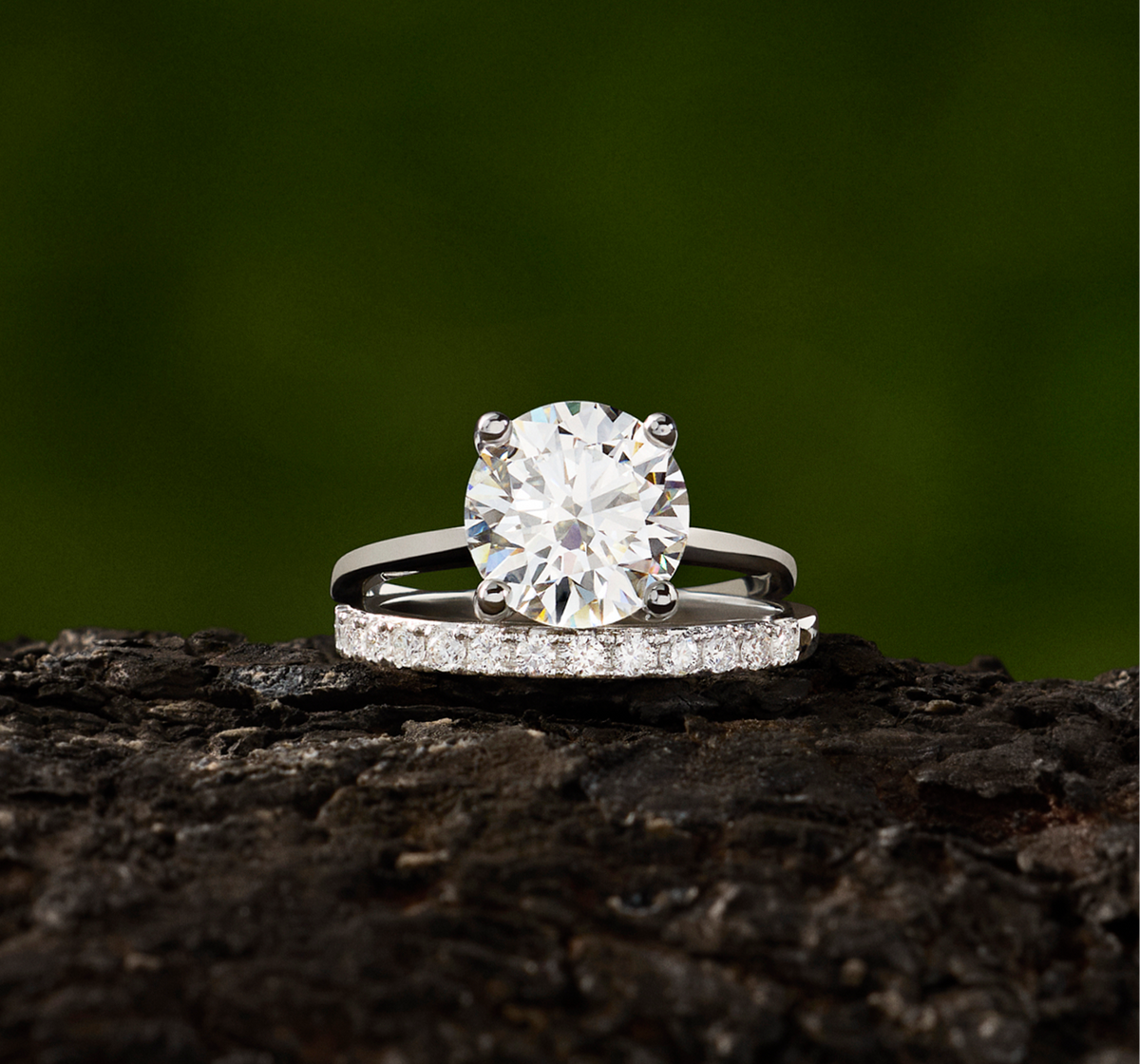
This ring style features a single diamond set at the center, prized for its clean, timeless simplicity. Four- and six-prong settings are most common, lifting the stone to catch light. It suits those who want their ring to read as classic, not trendy.

Halo
A halo ring surrounds one center diamond with a circle of smaller pavé stones. The ring of diamonds adds sparkle and makes the center stone look larger. This style fits personalities drawn to glamour and extra presence.

Three Stone
Three diamonds anchor this design, read as past, present, and future. A larger center stone sits flanked by two smaller ones. It's a natural fit for couples who want meaning built into the design itself.

Multi Stone
This style arranges three or more diamonds in a non-traditional layout, from clusters to asymmetric lines. No two multi-stone rings look quite alike. It appeals to those who want a ring as distinctive as their story.

Vintage
Vintage rings borrow details from Art Deco, Victorian, and Georgian design eras, think milgrain edges and filigree. Each era brings its own signature shapes. This style suits romantics drawn to history and old-world detail.

Statement
Statement rings lead with scale and unexpected design, oversized stones, colored accents, or sculptural bands. The goal is a ring that draws the eye. This style suits confident personalities who want their ring to feel unmistakably their own.

Choosing Your Diamond
Cut, colour, clarity and carat all matter, but specs are only part of the story. Use the 4Cs — plus how your diamond was created — to understand what makes a visible difference and what feels right for you.
Cut has the biggest impact on sparkle. A well-cut diamond reflects light beautifully and can look more brilliant even when other grades are similar.
Diamond colour is graded from D (colourless) to Z (light yellow). The differences can be subtle, so it helps to compare them in person and see what matters to your eye.
Clarity looks at the number, size and position of natural inclusions within a diamond. Many differences can only be seen under magnification and may not affect how beautiful the diamond looks to the eye.
Carat measures a diamond’s weight, not its beauty. Two diamonds with the same carat weight can look different depending on their shape, cut and proportions.
Choose between our Artisan Created Diamonds and mined diamonds. Compare them side by side to understand the differences in size, quality, value and how each diamond was created.

Choosing Your Diamond
Cut, color, clarity, carat: the 4Cs shape every diamond's story. Learn how they work together so you can choose with total confidence.

Artisan Lab Grown Diamonds
Much like love, your diamond jewelry should radiate an everlasting brilliance. Here are three bright ways you can keep your diamonds aglow.

Consciously Mined Diamonds
Every mined diamond we source is chosen with care, tracing back to responsible origins. Learn what conscious sourcing means and why it matters.
Frequently asked questions
Not finding the answers to your questions? Book an appointment to speak to one of our diamond experts - no pressure!
How much should I spend on an engagement ring? Honestly? There's no magic number, no matter what those old "two months' salary" rules try to tell you. Start with a budget range you're comfortable with, not one someone else decided for you. Not sure where to begin? A good baseline is a 0.5 carat ring. Try a few styles at that size, then go up or down until you find where you land. One thing worth remembering: the diamond is almost always the priciest part of the ring, not the band. The meaning of it has never once been measured in dollars.
Carat, cut, clarity, color, and created. Together, they make up a diamond's value. None of them matter more than what matters to you, but if we had to pick one to obsess over, it's cut. A diamond with perfect clarity and color still won't sparkle if it's cut wrong. Cut determines how light moves through the stone, and it takes real skill to get right.
Yes, fully. Artisan Created Diamonds are grown using technology that replicates the exact conditions that form a mined diamond, and they're certified by IGI right alongside our mined stones. The difference: for the same budget, you can get a diamond that's roughly 25% larger and two clarity grades higher. It's not a compromise; for a lot of people, it's the smarter diamond.
Whatever one feels like you. Round is the classic, most versatile choice. Oval reads a little more opulent and can make the finger look longer. Cushion and pear lean romantic; emerald and asscher lean editorial. There's no wrong answer. Just the one that feels right when you see it on.
Depends what you're after. Platinum is the strongest and naturally white. It won't fade, and it's hypoallergenic. White gold is the most popular pick, plated in rhodium for that same bright white shine. Rose gold adds warmth and a little romance. Yellow gold is the traditional choice, and it's a striking contrast against a bright diamond.
We'd say yes, every time. Photos and certificates tell you a lot, but they can't show you how a diamond actually catches light in real life. That's the one part of this we don't recommend skipping.
Since 1978. Almost 50 years of helping Canadian couples navigate exactly this decision. Which is really just a long way of saying: we've seen it all, and we're not going anywhere.
All of our Canadian locations have open showcases, meaning you can try on as many rings as you want; no glass cases, no asking someone for a key. Book an appointment at SpenceDiamonds.com, or just walk in.